Showing posts with label Homeschooling amp; Montessori. Show all posts

Thursday, February 20, 2014

Montessori Economic Geography Stamps


The Economic Geography Stamps are now available for pre-order at Garden of Francis. (click here)

These are now shipping! They will begin shipping out prior to March 1. I am taking pre-orders to see if it is worth purchasing the tackle-boxes and the wood holders in bulk, or just buy a few at a time as I need them.

My son is so excited! 

(ok, I am too!)


I am so happy to be offering these for substantially less than the ONLY other set available anywhere online that I can find - and they correspond with our KotU geography album!

By the way, side-note: if, as we are using them, anyone wants a different stamp image made, the process I'll be using can very easily accommodate this! In fact, after this first batch of these ones, I am going to look into making stamps of other images for other themes.

Montessori Elementary Economic Geography Stamps - corresponding with the Keys of the Universe Montessori Elementary Geography Album chapter on Economic Geography.

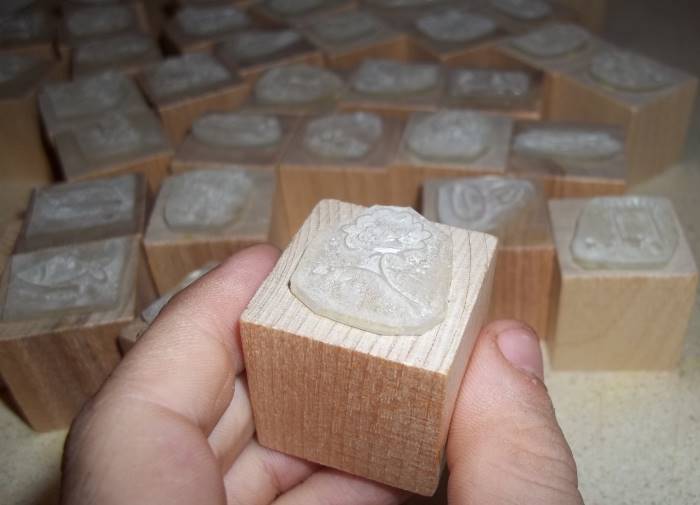
Each  polymer (not rubber, but like rubber) stamp image measures 3/4 inch at its widest; mounted on a 1 inch square cube - with the image imprinted on the top of each cube for easy reference.

Select which set you would like: the core set contains 26 images of mineral, plant and animal resources; the supplementary set contains 14 additional images in more specific items.

Each corresponding tackle-box comes with a cardstock print-out of the included images for that set.

CONTENTS CORRESPOND WITH AMI MONTESSORI ELEMENTARY TRAINING ALBUMS. And are most specifically designed for Keys of the Universe albums.

Purchase your own ink pads according to the color designations of your choice (see the elementary Montessori geography album for further details).


EDITED TO ADD!!!!

With the process we are using to make these stamps, we can VERY easily create custom orders and we are looking to create designs related to the Faith (especially as related to the Catechesis of the Good Shepherd):

true vine, grapes, chalice, paten, altar, Good Shepherd, sheep, cross, dove, flame, shooting star, etc.

We are definitely taking suggestions! We can make them from 1/2" up to paper size.....


:)

Friday, September 21, 2012

Catechesis of the Good Shepherd and Montessori

Wow. I am still in shock.

As I reflect on the letter I received today (I am typing this on Friday afternoon), I thought I'd share some thoughts that answer some private questions I receive from time to time.

Basically, these questions center around the relationship between Catechesis of the Good Shepherd and Montessori education - for US. In OUR family.

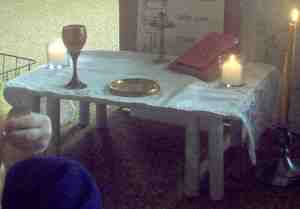
Altar Cloth and Linens - Click Image to Close

Quote from the acceptance letter:
"With your great Montessori background, it's easy to want to include many wonderful materials in the atrium, but especially in an atrium used for training, we need to be true to Sofia and Gianna's understanding of the essential."

I appreciate what is said here, but I have some concerns as well.

  • I came to Montessori THROUGH Catechesis of the Good Shepherd. Yes, I found Montessori first, but I had levels 1 and 2 formation in CGS before I went to AMI primary Montessori training. The above statement makes it sound as if Montessori came first. Then level 3 CGS and elementary Montessori training overlapped.

  • AMI is foundational. It does not participate in "fluff" and it too focuses on the essentials.

  • I have full respect for Sofia and Gianna, and I have equal respect for Maria Montessori. All three ladies focused on the essential with the children, yet Sofia and Gianna's work was founded on Maria Montessori's work. This is getting a bit into the chicken/egg syndrome, so the main point is that we canNOT separate the Montessori method from CGS without losing KEY QUALITIES.

  • Many of those foundational Montessori principles that are given in CGS formation courses (silence game, walking on the line) are losing their strength in the passing from one adult to the next. But when such exercises are fully present in the atrium, you find children who are centered (normalized), at peace, and working deeply.

  • For me personally, CGS informs my application of the Montessori method in the academics far more than Montessori affects my CGS work in the realm of faith formation. I am not necessarily taking the above comment personally, but I do feel it is a blanket statement that reflects a division between the two rather than a recognition of CGS's roots in Montessori - the condition of the roots reveals the condition of the potential flowering.


Some interesting tidbits on the relationship between CGS and academic Montessori - or how Montessori can and SHOULD apply to CGS:

  • Walking on the line and the silence activity are being watered down in CGS and the fruits are not forthcoming. These are *essential* Montessori principles that CGS needs to hold onto tightly, or it will become simply a mental exercise in religious education, such as Godly Play has become.

  • Evolution and Age of the Earth: The academic materials that inspired such level 2 works as the Fettuccia and Blue Unity and History of the Gifts - has NO MENTION of the specific number of years since the birth of the Earth.  Yet originally these CGS materials were made to represent a certain number of years and specifically TAUGHT evolution. I will not get into evolution versus creationism vs something in-between here. I will simply state that it is NOT the place of the atrium to get into this topic either. The atrium's place is to emphasize that God created the world and provided these gifts without mention of length of time. Let the children's imaginations, their schools and parents work it out. These modifications were finally made, but only after the Montessori community looked even further down on CGS for even trying to say that a rib on the grosgrain indicates 1,000 years - pure Montessori has no such material, neither should the atrium.

  • I have had SO MANY children struggle with the concept of going from a globe to this flat map of Israel, with little to no connection to where we are now (other than on the globe). This is an area that CGS atriums should be introducing a brief preliminary geography material. Starting with the globe, then a round ball of clay, cutting the clay into two (hemispheres) and rolling them flat to show the two halves of the earth on a flat surface; then showing the puzzle map of the world, with Israel and the atrium's locations marked.

  • We have Exercises of Practical Life in the atrium, but so many catechists are NOT focused on the Montessori essentials and they introduce "fluff" into the EPL area, at the same time they ignore what is most essential. Yes, the children need EPL. It fulfills developmental needs that allows the catechist to then get into the theological presentations. HOWEVER, transferring puff balls from one bowl to another is not necessary in the atrium, unless you have the children using tongs to get fresh cotton balls for the polishing work.


The tray on the left should be glass

or hard plastic; I was using it elsewhere

the day this photo was taken.


  • Polishing: I have personally streamlined my AMI album pages on glass, metal and wood polishing, so that ONE presentation can be given and the child now has all the polishing available to work on. The only differences are the actual polishes in the bottles, the type of tray, the ring and the dish for the polish and cotton ball - designed to indicate what that polish is to be used for.

  • There are a few ways that the Exercises of Practical Life within the atrium can be freshened up, so as to focus on the essentials, while meeting children's developmental needs, and leading more fully into the life of the atrium, the family and the church.

  • Last EPL thought: consider how the children are to be responsible for the atrium and the church; provide those materials (polishing, flower arranging, cleaning, sweeping, folding cloths (ie for the altar)). Consider what preliminary work they need in order to accomplish those works (eyedropper transfer for polishing, introductory cloth folding, carrying trays and mats). If you need a few more preliminaries at the beginning of the year, fine! Then pull them out by the second month of atrium so the children are not matching colors or transferring puff balls all year when they have other work that more fully meets their developmental needs.

  • Language: Some people add far more 3-part and 4-part cards than are entirely necessary. I fully agree with CGS's current materials manuals in how much they provide, with one exception: it is nice to have the 3-part cards for the cities of Israel for the level 1 children. But I have seen some people go much, much further and label *everything*. It gets to be too much.

  • Summary: So in many areas, the Montessori influence is not balanced. Too much or too little and both to the detriment of the potential of the album.


In all other aspects, CGS is separate from the academic Montessori, which includes something good and beautiful (we call it Cosmic Education ;) ), but is separate from CGS in that Catechesis of the Good Shepherd is theology at its richest and deepest.


I recognize what I would be doing in a formation course; but I wonder how I would go about assuring that stronger, balanced Montessori foundation.


Again, though, CGS has impacted how I do the academic portion of Montessori far more than my Montessori background will ever impact CGS.


Sunday, May 6, 2012

Elementary Biology Album - now available

My son and I have been working feverishly to get this elementary Montessori biology album put together for everyone. It is a really fun album and every activity has been brought back so many wonderful memories, either just for me (because I'd done them with other children before I had my son) or for both of us, because we've done them together.

But the formatting was driving me crazy and I finally got my son on board to help. He didn't help much, but at least I could justify a mental break ;)

Without further ado - the Biology album, which covers ages 6-12 - or lower AND elementary Montessori - is available in the usual places:

Keys of the World

Garden of Francis

Keys of the Universe

with online support available as well.

ENJOY!

Sunday, April 22, 2012

Keys of the Universe Elementary Montessori Course Giveaway!

Visit Montessori Nuggets - Elementary Montessori Course Giveaway for several chances to win $40 off the Elementary Montessori course offered at Keys of the Universe.

Remember to leave a comment on THAT post for each entry :)

So what are the elementary Montessori children going to study? At primary, the keys of the world were given to the young child; the second plane child at elementary is given the keys to the universe. “The universe is an imposing reality and an answer to all questions. We shall walk together on this path of life for all things are part of the universe and are all connected with each other to form one whole unity.”[1]

The universe is our curriculum!
Enhanced by Zemanta

Tuesday, April 17, 2012

Montessori Theory Album

Now available for sale at Garden of Francis!

(updated: and other locations on the internet as well)

Both primary Montessori theory AND elementary Montessori theory albums.

Are you interested in Montessori but know that you can not invest in all the materials?

Did you do primary Montessori with your children and want to at least continue with the concepts, if not the materials?

Would you like to start with the Primary level and truly understand what it is all about on a more practical level?

Are you looking to do full elementary Montessori, with some or all of the materials, but you're not ready to stat yet; just want to mentally prepare?

Perhaps your children are primary and you're getting ready for elementary.

Have you been doing primary Montessori or elementary Montessori and feeling like you're just not quite getting it?

The theory album is JUST what you need! For each one of those situations and more!

[caption id="" align="alignnone" width="328" caption="Elementary Montessori Theory Album for ages 6-12"]Montessori Elementary Albums - Theory - Click Image to Close[/caption]

Where to find them?

Keys of the Universe - only elementary albums - instant access to download and permanent access - you can always download a fresh copy if you lose your computer file or I make an updates. Course work is optional.

Keys of the World - primary and elementary - purchase download or print options - download will be e-mailed to you.

Garden of Francis - primary and elementary - purchase download or print options - download available immediately; but not a permanent link.

:)

Wednesday, March 28, 2012

Celestial Alamanack - Homeschooling style :)

The latest Celestial Almanack by Classical Astronomy at Fourth Day Press is here!

Homeschool astronomy - Montessori, classical, unschooling - any educational method! Including for us adults who just missed out ;)

Biblically-based, written by a homeschool father, up-to-date, beautiful, multi-age and multi-ability - you can't beat it!

See a free preview by clicking here.
Enhanced by Zemanta

Saturday, February 25, 2012

Astronomy - March Almanack is Available!

I am now a CurrClick affiliate - be sure to click on the banner ad to the right column OR this link when you are going to purchase something (you have to go through this link every time or I don't get credit....)

CurrClick

--------------------------------------------------------------------------------------------

Our current top favorite: The Celestial Almanack from Classical Astronomy - only $3 per month for user-friendly nightly information on the sky (and even daily information!) - my son LOVES this Almanack!


Enhanced by Zemanta

Wednesday, February 15, 2012

Montessori Homeschooling Blog - for Elementary!

One *more* new blog for everyone!

Montessori Trails

Like Montessori Nuggets, this is another blog where I will schedule posts out in advance - so please do ask if there is something you'd like to see.

Montessori Nuggets - daily Montessori treasure, tidbit, bite of wisdom, something to ponder, or practical information

Montsesori Trails - our homeschool journey, from my discovery of Montessori through all the ups and down of our experiences, good, bad, ugly, beautiful, scary and otherwise.

Since we're officially at the elementary age, there will be plenty of that age too!

Saturday, February 11, 2012

Reading Programs We Like

Caveat: I'm a Montessorian (and an AMI keys-based one at that) - so I'm not keen on any reading program in its entirety.

See this blog post over at Montessori Nuggets about learning to read steps for children without severe other issues going on.

Keys of the World will soon be offering a keys-based Montessori guide to reading (i.e. it does not use the pink/blue/green (and now purple?) reading series - which can be used as a supplement if you so choose ;) ).

However, I have found the following resources quite helpful in particular situations:

  • Catholic Heritage Curricula - Little Stories for Little Folks

    • Each story focuses on specific skill sets - so little bits at a time. There are word/letter games as well as opportunities for drawing, coloring and vocabulary-building.

    • If you're not Catholic, they're still great in their step by step, keys-approach to reading. The stories more intrinsic to the Catholic faith that can be modified or removed, assuring you cover the "new" material in another way.

    • Follow up with their supplemental readers if you like (corresponding with specific levels) as children plateau at the various stages, then Bigger Stories for Little Folks, Devotional Stories for Little Folks, Devotional Stories for Little Folks Too, all of which follow a Catholic homeschooling family through the usual experiences of family life.

    • Scripture and church life are included.

    • These are great for learning to read, moving ahead pretty quickly, then going back to "review" but have the child read the earlier levels aloud to ensure pronunciation and practice voice tones, inflections and other read-aloud skills - with words they already know and understand.


  • Christian Light Publications - Learning to Read and Reading to Learn series

    • Gentle faith-based stories without being preachy in any way; illustrations are of Mennonites; can be used by families of any faith

    • Includes poetry, stories and Bible passages

    • Vocabulary sections teach dictionary pronunciation in the earliest levels - a very nice feature, especially from a Montessori perspective

    • The included light-units are easily modified for use by a Montessori student using these only as a supplement, or can be completed in their entirety (my son did them all! He loved them!)

    • Heavy emphasis is placed on reading comprehension not just reading skill - also a nice feature from a Montessori perspective - children may be able to read and understand the stories of upper levels with ease, but the light-units encourage the child to really think about what is going on.


  • My son and I even used the Bob Books (I thought I'd never use them! But I'll admit - Montessori-wise, they use the line drawings, they entice a kindergartner's sense of humor and they are easy for the child to re-create).

    • We modified them a bit and turned them into a reading *activity*.

    • I photocopied them onto plain paper, and cut the words from the picture.

    • He would read through the booklet; then take the copies and match up each line of words to the corresponding picture.

    • This is a very Montessori-like activity done much more inexpensively (we bought the Bob books used)

    • While it helps with reading comprehension, even adding this activity, does not make the Bob books a complete learning to read series on its own. The child could memorize the shape of the words or have a photographic memory to know the length of the lines on each page. So this is where reading-aloud after some silent reading practice with the booklet comes into play.


    Would I recommend anything else? No not really. I've used other programs, series, games, curricula, and never been satisfied. They are all too gimmicky or chore-like, inappropriate for the ages intended, and modifications are difficult.

    While none of the above are complete-enough in my estimation, they serve a very strong purpose and I can recommend them in their entirety, without qualms; but I do not say they are complete by themselves; they all must be part of a life that includes daily life experiences in reading: recipes, lists, notes from parents and siblings, cards from relatives and friends, street signs, reading for enjoyment, and any other reading that takes place in a typical daily life for that particular child. Combined with the tips at Montessori Nuggets, and a solid keys-based approach to reading, there is no reason a normally developing child should not be reading at a second grade reading level or higher within 2 months of starting to put two sounds together in the same word.

      Saturday, February 4, 2012

      SHHHHHH! Currclick has a secret!

      Latest from Currclick:

      Welcome to our Winter Whisper sale!


      Right here, a secret page of our website, our Winter Whisper Sale and Giveaway is going on. TEN freebies are being given away, and TWENTY of our bestselling publishers have discounted all their resources by 50%, and NOBODY knows about it but you.

      It's hard to keep a secret though, right? Don't worry, we won't make you. You can tell your Facebook and Twitter followers, your co-op, your neighbor, your newsgroups, even your strange Great Uncle. The only thing we ask you NOT to do is post the details on our Facebook page.

      And what are the details?

      1. The URL for the sale is: http//:www.currclick.com/cclick_wintersale.php. (be sure to click the link above, log-in, THEN go to the sale URL!!!!!)

      2. Give the secret URL and details to whomever you like. Encourage them to start whispering too.

      3. VERY IMPORTANT: Because this is a secret sale, sale items must be added to your cart from the sale page. If you add an item from another product listing, and not the sale page, you will not get the sale price. However, we'll note your Whisper savings in your cart, so you can be sure.

      4. CurrClick's Winter Whisper Sale ends February 16th.


      People say that word of mouth is powerful in the homeschool community. Let's find out!

      The CurrClick Staff

      Friday, February 3, 2012

      CurrClick Affiliate

      I am now a CurrClick affiliate - be sure to click on the banner ad to the right column OR this link when you are going to purchase something (you have to go through this link every time or I don't get credit....)

      CurrClick

      --------------------------------------------------------------------------------------------

      Our current top favorite: The Celestial Almanack from Classical Astronomy - only $3 per month for user-friendly nightly information on the sky (and even daily information!) - my son LOVES this Almanack!

      [caption id="" align="aligncenter" width="324" caption="Celestial Almanack"]Celestial Almanack[/caption]

      Sunday, January 15, 2012

      Modern Logic - WFF 'N Proof style!

      What is a WFF?????

      A Well-Formed Formula of course ;)

      Huh? You're asking?

      Well here is a Wikipedia article on it, but if you're like me and still saying, "Huh!?" here is a short answer:

      In mathematical logic, a well-formed formula, shortly wff, often simply formula, is a word (i.e. a finite sequence of symbols from a given alphabet) which is part of a formal language.

      A formal language can be considered to be identical to the set containing all and only its formulas.

      -------------------------------------------------------------------------------

      And the better answer is: it's a statement that follows a set of rules. Think of A=B, B=C, therefore A=C. If certain things are true, then other things are true based on sets of given information. Both our language of words and our language of numbers (mathematics) are based on these principles.

      We love this game from WFF 'N Proof: Games for Thinkers:

      [caption id="" align="aligncenter" width="254" caption="WFF: The Beginners Game of Modern Logic"]WFF: The Beginners Game of Modern Logic[/caption]

      Details from their website:
      WFF includes the first two games from the complete WFF ?N PROOF series. Two engaging speed games allow players to learn to recognize WFF's (Well Formed Formulas) in symbolic logic. Both Shake-a-WFF and Count-a-WFF are fast-paced, exciting games dealing with a unique symbolic system. They are an appealing exercise for all ages.

      There are two games within this one (actually a few more if you count the other variations): Shake-a-Wff which is a competition - both players play at the same time and grab a coin in the middle when they have a WFF first. And there is Sequential WFF where the players take turns, so there is no "race."

      My 7 year old really, really, really wants to play competition WFF, but he's so into the time-racing component he makes a LOT of mistakes and neither does he proceed nor does anyone else have the opportunity to proceed forward.
      So we do a lot of Sequential WFF (players take turns, using as much time as they need to create a Well-Formed-Formula).

      If you're looking for a really good LOGIC program or curriculum, this is the way to go. The basic game is $3.50. The next step up is only $35, can be played by a 6 year old and still be challenging for a 60 year old math genius: WFF 'N PROOF: The Game of Modern Logic.
      Enhanced by Zemanta

      Friday, January 13, 2012

      Equations - Mathematics from WFF N Proof

      Here is a game we've been playing:

      [caption id="attachment_631" align="aligncenter" width="300" caption="EQUATIONS: The Game of Creative Mathematics - From WFF 'N PROOF"][/caption]

      You roll the dice, create a "goal" (the answer to the equation); then take turns moving the cubes into either forbidden, possible, and required categories, all the while keeping your equation to reach the goal secret.

      When you see someone else make a mistake, you call a flub (there are several types of flubs). Then you have to prove yourself right or the opponent wrong.

      It's math, it's strategy... it's logic! Who needs a formal logic curriculum or logic program, when you have games like these from WFF 'n Proof?


      From their website:
      At home, EQUATIONS lets the whole family share a quality learning experience and have fun too. People of all ages become fascinated by this game. It creates a rich problem-solving interaction filled with complex strategy, bluffing and intrigue. The basic game can be taught to eight-year olds using simple arithmetic. As players develop skill, the game becomes more sophisticated. It ultimately expands to concepts that will challenge any intelligent adult.

      EQUATIONS explores a broad range of math topics including elementary arithmetic operations such as addition, subtraction, multiplication, division, exponentiation and root operation as well as logarithms, fractions, decimals, percents, variables, algebra, functions and more.

      It sounds complicated - but it is addictive fun!

      REQUIRED:  get the DVD to learn how to play - well worth the $5!

      Got a Montessori child? They could be ready at late 6 - but only if they've been playing WFF: The Beginner's Game of Modern Logic. I strongly recommend this game for all children, but Montessori children will be especially intrigued by it. It can then be followed up by WFF 'N PROOF: The Game of Modern Logic. More on these in another post ;)

      Thursday, January 12, 2012

      Montessori Nuggets

      A new Montessori blog! Now most Montessori posts will be over there and this blog can focus back on our own homeschooling and life happenings :)

      Montessori Nuggets: Daily Montessori Treasures

      [caption id="" align="alignright" width="300" caption="Image via Wikipedia"]Les Périodes Sensibles de la Pédagogie Montessori[/caption]

      You can sign up for an e-mail feed and receive a Montessori Nugget in your e-mail each day.

      Most posts will be relatively short and to the point. More information can be found via various theory papers, in the albums I'll be soon offering for sale (yay!), other locations on the internet, in Maria Montessori's books, or in the elementary Montessori online training at Keys of the Universe.
      Enhanced by Zemanta

      Monday, January 2, 2012

      Astronomy - for children

      Astronomy can be quite abstract, but what child doesn't have some fascination with stars and planets and moons?

      There are some really neat books and activities written for the youngest children. I've wondered for a long time, though, "Are these too abstract? Is it appropriate to teach preschool children about astronomy? Shouldn't we wait until they are in elementary to really get into studying these things?"

      Well, I sort of still agree with myself - and I sort of don't.

      My primary Montessori training did not include much on anything beyond the world. The focus was giving the child "keys to the world". But I've seen other Montessori albums for the same age group that include basic presentations on not only stars, but the planets in our solar system, discussions on galaxies, and more. While I do not see these things as "keys", I can confidently say that if a child has an interest, Follow the Child! If there is an interest, there is more likely to be an ability to grasp some abstract concepts, though I still say, "Focus on the keys even within the interest."

      But what about the rest of the under-6 children? Those without an intense interest? Well, we should definitely give them sensorial experiences - let them see the stars, watch the sun rise and set, note the phases of the moon, perhaps even mention that some of the brighter objects in the sky are actually planets, worlds that also go around the sun like our own - these things can all be seen from the world on which we live and can fit in the same category as cloud-watching (look for patterns in the stars as you would look for patterns in the clouds). If there is interest in moon-phases, get a really neat book on it, such as Moonfinder, which can also be used by older children and just follow their interests. There is no need to give them more than they are asking.

      As these young children pass into the second plane of development, starting between 5 and 6, they will want to use their imaginations, and we can work  with their reasoning mind. Now our Montessori geography presentations include presentations on the sun and earth in relationship to one another; God with No Hands (the creation story) is followed up by many branches of science and one direction is also discussing the remaining planets in our solar system.
      There is a great Magic School Bus Secrets of Space science kit on the planets for 4-8 year olds (there are places to pick up 6 MSB kits for less about $90 if you're interested in all of them); I would not go much above age 7 or 8 with this kit, unless the child is at a lower academic level. And many excellent kits and tools for older children.

      Hint: if you're going to invest in a telescope, get a good one. You do NOT want to make this a frustrating experience, so invest in something good. If that means waiting a bit longer, just get a *really* good pair of binoculars in the meantime - it's amazing what can be seen with something so simple.

      There are so many good websites for children and parents to explore together.You may want to install something like AdBlock before visiting ad-intensive sites.

      Start with NASA.gov -- then visit any of the following (and please share your own discoveries in comments)

      ClassicalAstronomy - Christian-based website featuring a free newsletter, inexpensive monthly Almanack, Signs and Seasons Curriculum, Moonfinder book and more. This site really focuses on what a child can actually experience and discover.

      Astronomy.com

      UniverseToday.com

      SkyAndTelescope.com

      BadAstronomy.com - Dedicated to quelling myths and rumors

      I'll add more sites and links to Montessori materials soon!
      Enhanced by Zemanta

      Sunday, January 1, 2012

      Elementary Montessori Geometry Nomenclature Contents

      Geometry is a popular topic of late on several groups of which I am part - both Montessori and non-Montessori.

      At primary, we give the children the names of the shapes (plane and solid), and we give some basic parts such as parts of a triangle, so they become familiar with angles and such.

      In elementary, we go much deeper with it because the child has had a lot of experience, has the vocabulary, and now wants to know definitions and origins - and connections between all things.

      ---------------------------------

      I thought I would share the "table of contents", if you will, for the elementary nomenclature material as I have them in my Montessori albums. Different sets are available, which are also great for use; this is just what I have :)

      Each letter/number is a booklet, with a packet of 4-part cards (name, definition, picture (use the booklet as control))

      The title is listed follow by (the contents in parentheses)

      ---------------------------------

      A1: Point to a Solid (point, line, solid, surface)

      ---------------------------------

      B - Lines

      B1: Types of Lines (straight, curved)

      B2: Parts of a straight line (origin, line segment, ray, end points, line)

      B3:  Positions of a straight line (horizontal straight line, vertical straight line, oblique straight line)

      B4: Position of 2 straight lines (convergent straight lines, perpendicular straight lines, parallel straight lines, divergent straight lines)

      --------------------------------

      C -Angles

      C1: Angle and its parts (angle, size, sides, vertex)

      C2: Types of Angles (obtuse, right, straight, acute, whole)

      C3: Relationship between 2 angles (adjacent, vertically opposite, linear pair)

      C4: 2 Particular Combination of angles (complementary, supplementary)

      C5: Angles formed by 2 straight lines cut by a transversal (exterior, interior, alternate interior, alternate exterior, corresponding)

      --------------------------------

      D - Plane Figures

      D1: Types of Plane Figures (polygon, simple, closed, curved)

      D2: Plane figures bounded by line segments (triangle, polygon, quadrilateral)

      D3: Plane figures bounded by curved lines (ellipse, oval, circle)

      ---------------------------------

      E - Triangles

      E1: Types of triangles according to sides (isosceles, scalene, equilateral)

      E2: Types of triangles according to angles (acute-angle, obtuse-angle, right-angle)

      E3: Parts of triangles (surface, sides, base, perimeter, vertex, altitude, angle)

      E4: Sides of right angled triangles (hypotenuse, legs)

      ---------------------------------

      F - Quadrilaterals

      F1: Types of Quadrilaterals (parallelogram, rectangle, trapezoid, rhombus, square, common quadrilateral)

      F2: Parts of the basic parallelogram (surface, sides, base, perimeter, vertices, altitude, angle, diagonal)

      F3: Parts of the rectangle (base, diagonal, sides, vertices, surface, altitude, angle, perimeter)

      F4: Parts of the rhombus (diagonal, angle, altitude, vertices, perimeter, base, sides, surface)

      F5: Parts of the square (diagonal, angle, altitude, vertices, perimeter, base, sides, surface)

      F6: Parts of the trapezoid (vertices, perimeter, angle, oblique sides, surface, bases, major base, minor base, altitude, diagonal)

      F7: Types of trapezoids (scalene trapezoid, right-angled trapezoid, isosceles trapezoid)

      -----------------------------------

      G - Polygons

      G1: Types of polygons (irregular, regular)

      G2: Types of regular polygons (equilateral, square, pentagon, hexagon, heptagon, octagon, nonagon, decagon)

      G3: Parts of the polygon (surface, sides, perimeter, vertices, angle, diagonal, center, radius, apothem)

      ----------------------------------

      H - Circles

      H1a: Parts of a circle I (radius, diameter, chord, surface, center, circumference)

      H1b: Parts of a circle II (semi-circle, semi-circumference, arc segment, sector)

      H2: Relative positions between circumference and a straight line (external, secant, tangent)

      H3: Relative positions between 2 circles (external, internal, externally tangent, internally tangent, secant, concentric)

      (I have also seen annulus included here - but question if it belongs here - it is more likely to belong in a booklet discussing the parts of two circles in position with one another)

      Sunday, October 30, 2011

      Heights and Depths of Geography

      What is geography? What do you think of when you hear the word geography?

      Memorizing the names of countries and capitals? Labeling maps?

      Perhaps you go a bit further and consider the trade that occurs within countries and between countries?

      Or perhaps you are familiar with the 5 themes of geography or the 18 standards that replaced the 5 themes found at the National Council for Geographic Education.

      Geography is even more!
      Geography is the study of the earth and its living creature; the earth's place within the universe, the depths of the earth, the heights of the atmosphere and those things joined to the earth naturally or through man-made means.

      Geography studies the layers of the earth, the life that lives in every area, the moon that orbits the earth, the cultures of people who live in each region, and still more.

      To receive a full scope of all that geography entails, let us look to how the Montessori method presents geography, within a context of cosmic education:the idea that all subjects are inter-related so no subject is truly taught in isolation:

      The youngest children (the infants and toddlers) are first given their own culture: mother and father's loving arms, the stories they tell, their ways of speaking and interacting.


      [caption id="attachment_490" align="alignleft" width="150" caption="Sample of a primary Montessori puzzle map"][/caption]

      Primary children (ages 3-6) are participating more and more in that culture, really honing in on the exercises of practical life (designed to suit their particular culture, and as they reach ages 5 and 6, exposure to the practical life of other cultures). They are given globes to show land and water, then the continents, then the oceans, then the climactic zones. Puzzle maps of the world and of the continents are designed to not only show general placement, but to show the location of the capitals (each continent map has its knob approximately at the capital of that country). Flags for each country, cultural folders (or drawers), exposure to other languages, stories and books about children from around the world, lead the children on an exploration of the keys of the world - their world, where differences and similarities are equally celebrated.

      [caption id="attachment_491" align="alignright" width="225" caption="Perpendicular and Oblique Rays of the Sun"][/caption]

      Elementary children (ages 6-12) are now ready to take on the universe. We begin geography and history with the First Great Lesson: the Story of God with No Hands (or the Creation of the Universe Story). This story introduces the layers of the earth, states of matter, the beginning of time, universal laws and the obedience of all created things to that law. Subsequent lessons within geography present laws of gravity, physics, astronomy, geology, culture, economics, and more.


      The table of contents for the elementary Montessori geography album includes the following (note that this list does not include each of the sections within each presentations, which can span anywhere from 2 to 10 sessions, within any given week or over the course of 1-6 years; also astronomy has been separated into a separate album according to Keys of the Universe Elementary Montessori albums):

      Elementary Montessori Geography

      Introduction to Geography
      -Practical Considerations for the Experiments
      -Notes on the Experiments
      -Command Cards
      -Geography Nomenclature
      Chapter I: Creation of the Earth/Idea of the Universe
      -God with No Hands
      -Experiments with God with No Hands
      -Notes on the Story
      -Follow-Ups to the Story
      -Composition of the Earth
      -Further Details of the Composition of the Earth
      -Formation of the Mountains
      Chapter II: Nature of the Elements
      -Three States of Matter
      -Further States of Matter
      -Different Ways of Combining
      -Separation, Saturation, Super-saturation
      -Attraction and Gravity
      Chapter III: The Sun and the Earth
      -Rotation of the Earth and Its Consequences
      -Time Zone Chart
      -Earth as a Sphere and Its Result
      -Tilt of the Axis
      -Seasons and the Two Tropics
      -The Zones
      -Zones’ Work Chart
      -Protractor Chart
      -Seasons Work Chart
      -Protection of the Atmosphere and the Rains
      Chapter IV: The Work of Air
      -Experiments Prelude to the Winds
      -The Winds
      -Land and Sea Breezes
      -Changes in the Winds Caused by the Seasons
      -Rains
      -Work Chart of the Winds
      -Ocean Currents Caused by Winds
      -Wind as a Sculptor
      Chapter V: The Work of Water
      -The River
      -The Rains
      -Ocean Waves
      -Ice
      -Water Cycle
      -Spread of Vegetation
      -People in Different Zones
      Chapter VI: Human Geography
      -Interdependence of Human Beings in Society
      -Economic Geography
      Chapter VII: Functional Geography
      -Map work
      Enhanced by Zemanta

      Sunday, August 21, 2011

      Keeping it Catholic – Montessori

      Marianna Bartold tries to make a case against Montessori, but it falls flat and she refuses to respond to any requests for further information. After 5-6 years of periodically attempting to contact her, I just have to put this article out here for you all. I am asked to respond to these matters at least 4 times every month by well-meaning conscientious homeschooling parents and potential Montessori trainees who are Catholic. I contact Ms. Bartold about once every 2-4 months, over the course of the last 5 years, more often when I was preparing to go for primary training and wanted to make sure I wasn't making a terrible mistake.
      In the meantime, I suppose I have found the answers I needed, but they are not to my satisfaction. See, I found NOTHING to support Ms. Bartold's claims against Montessori. I really want to know her sources for her information on what is acceptable by the Church and what is not. I can't find them myself and she does not seem to cite them anywhere. If anyone has any further information on her sources, please, please, please do respond via comments (all comments moderated for this reason) so I can make appropriate adjustments to this article.

      Before I go on, I want to make it clear: I am not bashing Ms. Bartold in anyway - that is not my intention and I strive to keep that clear throughout this article. The intent of this article is take care in one place all the questions, concerns and issues raised over the course of the last 4 years of my life, from homeschooling parents and others. I have an intellectual disagreement with Ms. Bartold and intend to keep it there. Any comments directed to a personal bashing of Ms. Bartold will be immediately deleted, without editing, and without any further notification - and any valid ideas within that comment will need to be re-posted in a courteous, respectful fashion. Actually this policy applies to personal attacks of any kind: against anyone. Thank you!


      There are many ways in which Marianna Bartold and I are alike - we are likely more alike than not, but in two areas of checking sources and of citing those sources, we part ways.


      http://www.keepingitcatholic.org/blog/index.blog?entry_id=211982 is the source for all that I have quoted from her.


      God bless!


      Keeping It Catholic - with Marianna Bartold


      January 31, 2004


      Catholic Insights into Montessori Education


      Still, there are Catholics who claim that, since Montessori was Catholic, what she taught regarding the rearing and education of children must be acceptable to Catholics. That would be true if we lived in a perfect world, but we don't. We all know that we live in a fallen world and that our own natures are wounded, that we are disinclined to abandon our own thoughts and ideas, and that - for the most part - we human beings do not easily bend our wills to God. (If we dare to say otherwise, we really are guilty of pride.) The truth of the matter is that we can easily make up all kinds of excuses to continue doing what we want to do, and we easily defend ourselves because we do not want to admit we were misled...it is so much easier to do those two things instead of obeying the Church's teachings.


      It was through obeying the Church's teaching that I discovered Montessori and found it to be a seeming treasure-trove of educational opportunity for the reality of the whole, complete, real child - the child of God that each one of us is. But this is an entirely different story! Short story - I came to Montessori because of the Church's teaching on the dignity of each individual person, from every age until every age.


      Regardless of the nay-sayers, please realize that no, despite her book, The Mass Explained Montessori's educational philosophy did not coincide with Catholic Church teaching. Most of the time she sounded like a rationalist/evolutionist (I'll explain why later.)

      Maria Montessori's educational philosophy recognizes the validity of the human child as a full and complete person in the process of forming himself into his next stage of development. Christianity is one of the few world faiths that actually value the child (think child-sacrifice, the belief that children are empty molds rather than a distinct and individual child of God with a distinct name written in the Book of Life).

      Montessori had some very strange ideas about child-raising and child education. And no, we are not talking about "hands-on" learning. Contrary to popular belief, "hands-on" is not what Montessori was about.

      Yes, hands-on is a huge part of it. She sought to find ways to bring teaching to the child rather than force the child to adapt in unnatural ways, and understand abstract concepts without the assistance of something material to aid the child. As Catholics, we should have a full realization of the complete nature of the human being: body and soul. Jesus came to us in flesh, a material being, in order to bring us to eternal salvation - an eternity in which our bodies will be reunited with our souls.

      This previous statement coincides with the above response as well - the educational philosophy correlates with Church teaching.

      For example, Montessori did not allow fairy tales or folklore, although she did promote her own "mythological" story about the world's creation - certainly a contradiction! So fairy stories and folklore were forbidden, but her own "fantasies" were to be promoted to children everywhere. Yet how many Catholics are aware of even that one Red Flag?

      Montessori spent years in careful observation - and shared with us what she saw - something that all of us will see if we only observe. The child before age 6 needs to be steeped in reality so that they have a strong foundation in reality. Most young children, when given free choice, would prefer to play house, bake mudpies, build with cardboard boxes, etc (all based on real events in their lives) rather than play imaginative games. Imaginative games come after the age of 6 (a bit younger for children who are truly steeped in reality their entire early childhoods). Before age 6, the child is exploring life around him, and finding his place in it - seeking to practice those skills immediately useful around him (see Montessori exercises of practical life, lack of "fantasy" stories, etc).

      After age 6, the child's imagination now has a strong foundation on which to take off. They can think abstractly and can understand historical events in greater context than can the child who was encouraged to play fantasy pretend too young; they can truly believe the events of Jesus' life and all the events within the Bible because they have a solid foundation of trust in the adult regarding what is true and what is not. The children can study fairy tales (which are moral tales anyway and the child does not develop a proper moral sense until right around the age of reason (hmm. the Church has defined the age of reason at roughly 7 - sometimes a bit earlier, sometimes a bit later - Maria Montessori observed this very specific development and provided for it...)) and other imaginative stories with a much fuller enjoyment than those of us raised on cartoons in our pre-age-6 days - how much greater is the reading of Narnia when you can delve right in without fear of getting lost in it, and truly enjoy it - than the reading of such works wondering "Hm. I wonder if he (the author) knows something I don't know - maybe there is something more out there that the Church is not teaching me...." which leads to doubts. A child with a strong foundation of trust in and of reality can enjoy imaginative works to their greatest depths, without any crumbling of their faith and trust in the world around them.

      There is no contradiction. Also, the children are told at the beginning of each of the Great Lessons: we weren't there, we can never really know all the details, but we can look at the evidence God has left for us, and we can wonder (a gift of the Holy Spirit: Awe and Wonder (aka Fear of the Lord)).

      Incidentally (and as I point out in my book, Keeping It Catholic Home Education Guide, Volume I), there are similarities in Charlotte Mason's original educational philosophy, many of the latter which coincide with those of Jean-Jacques Rousseau, the "father" of the "Enlightenment." The Enlightenment was that "rationalist" era of thought which led to the French Revolution, the invasion of liberalism throughout Europe and into the Church, and which has culminated today in the heresy of modernism.

      Let's put some things (just a few because this article is already too long) into historical perspective.

      1) If Montessori were doing her work now, she would be basing it on the work of Piaget and others of similar renown. Did I mention I have a degree in child development and it pretty much killed my love for working with children? Yes, and a lot of the "outcomes" and "suggestions for how to work with children" were based on Piaget and others. Now, I personally have issues with Piaget, but he is one of the founders for modern child developments. While Montessori observed things that brain research is only today revealing, she was not able to see into the future and base her methods off of anyone modern.

      1a) While you will find some similarities to Charlotte Mason, those are the similarities that are present in all good, developmentally and spiritually appropriate methods of education. Charlotte Mason herself detested Montessori methods, but her arguments were not well-grounded either!

      2) But she didn't live now; she lived then; and she had to start from somewhere. So she did. She started with those who had ideas about working with special needs children - Rousseau had distinct educational ideas and experiences - she utilized them, adapting most to the point of no/little recognition of the source now, and a very few remain the same. The fact is that pagans teach their children to read, and we do too -- and many of them use the same methods we use to teach those children how to read. So should we stop teaching our children to read in a manner that works for them just because pagans use the same Bob books or phonics system for example? I hope you all answer "No" to that question ;)

      3) She used the sources available to her at the time; combined with an extreme knack for observation --- and now all current child development practices are based on the work that others have done since Montessori's time - all inspired or started by her own research. Brain research today is proving what she observed in children 100 years ago. These same tendencies have been present since the beginning of time - and recognized by the Faithful and non-faithful alike for centuries. Montessori opened the door to further research. She did not develop ideas in isolation and apply them; she carefully observed the patterns of development that God implanted in each of us.

      4) Then there is the taking gold out of Egypt. My article is too long - hopefully we can google this phrase :)

      Sidenote: Did you know that "child-size" anything originated with Montessori? At least as far as educational settings go - she cut down broom handles to make them child-size, cut down tables to lower them, etc. This is not to say she is the first one to think of it (our great-great-grandparents may have done it too) - but she did push the idea. And now we have these *real* small items available for children, and people of all sizes - a greater adaptation to meet the needs of all people.

      While I understand that many Catholic homeschoolers might not appreciate hearing such things, I ask them to remember Church teaching on Catholic education and Catholic philosophy.

      And the Church does not tell us HOW to teach or WHAT to teach - only dictating that the parent have responsibility (whether that means directly teaching the child in homeschooling or choosing to have tutors or a school do the teaching - the parent has final responsibility for all mistakes and successes).

      I've studied at a devout Catholic college the area of philosophy. I'm still not seeing the red flags.

      I strongly recommend that interested homeschooling parents read Montessori's own works for themselves - not just another author on Montessori - and judge according to Church teaching (not just personal opinion). Just to pique your curiosity, I will provide a few examples from Montessori's book, To Educate the Human Potential. Brief background: Maria Montessori told her "creation" story to children, and she wanted it to be told by others who employed her methods. But why? It was because Montessori desired that children should mull upon the evolutionary processes.

      Two points here:

      Perhaps Ms. Bartold should take a bit more of her own advice. This one book is entirely taken out of context. The children do NOT hear these exact words as each of the Great Lessons is adapted by the teacher giving it. The original stories, as told by Maria Montessori are largely unknown, except those written down by her son Mario and these are easy to modify, and do not match what is found below nor in To Educate the Human Potential.

      Second point which ties into the first. At the time of her development of these stories, evolution was really making headway - and was a real possibility. Scientists all over were trying to combine the creation story of Genesis (or their particular faith's creation story) with the scientific evidence of creation/evolution. This blog post is NOT the place to get into the debate about how long creation took and its manner - all comments in this direction will be deleted. However, I will say this: The Catholic Church does not require we believe anything except that God had a guiding hand in the entire process. He started it, He keeps it going, He will bring it to its completion. The Catholic Church has no other official teaching on the matter. If you have any evidence to the contrary, please leave a post here (all posts are moderated anyway before posting) and I'll update this section of the post with the information you've provided.

      Montessori's creation story begins with the oceans (not God, not the Word), and of the "Tribolites" which were "three-lobed creatures, with many legs and numerous other appendices for swimming...other proud ocean dwellers were Cephalopods- literally meaning with legs on their heads - of which Nautilus is most famous."

      The creation story (God with No Hands) can be found in various places online. I have a version here on my site, that started with Montessori's original words (translated into English - she was Italian) and I have adapted it to avoid all usage of the passage of time. The first two pages have never been modified from their original form. You may read it for yourself. It begins with people. They are looking at the world around them and wondering about the great gifts they see. Who made all of this? they asked their wise men? God did.

      The remainder of the stories emphasizes that God keeps all things in perfect harmony and order; that all creation obeys His will. This story ONLY includes inanimate creation. The Coming of Life is another matter altogether.

      The Coming of Life: heavy on evolution, but possible to adapt while keeping the evolutionary concepts on the timeline so that the children can learn that there are some people in this world who believe in evolution. Let's give them this information so they are curious and want to explore the facts on their own. They may be the one to grow up and make the key discovery we all need!

      A little later, Montessori wrote: "We can imagine a committee of Angels or Devas, according to the religion we profess, older sons of God who direct earth's natural forces, sending forth a call for volunteers, and interviewing those creatures who responded with an offer of service..." My questions: The angels interviewed the tribolites? How does this absurdity correspond with the inerrancy of the Holy Scriptures? Why did Montessori acknowledge another name for angels - i.e., devas? Why did she write "according to the religion we profess"? As a Catholic educator, it was her duty to promote the Catholic faith, not religious indifferentism (which the Church teaches is a sin). When and if necessary to acknowledge other "beliefs" (as opposed to truths), the opportunity to charitably clarify those truths should have been included.

      These words can be found "To Educate the Human Potential" pg 24. Let's focus on the words "we can imagine" - it's an imaginative story. Like saying, "We can imagine that insects have a love for human blood" to describe a recent proliferation of insect bites - when, in reality, insects don't have a "love" (in the true sense of the word) for anything! They have a sensitivity, a need, an instinct - but not a love. Yet we say these things without becoming "bad Catholics."


      • DEVAS The word deva is from the Sanskrit language, meaning "a being of brilliant light" and is used to indicate a non-physical being.


      It seems the Bible itself also uses other words for angels. I cannot find the information right now, but seeing as how the Bible was written in several languages, the original word for "angel" throughout the Scriptures would have been from more than one language. I would be interested in asking a Biblical scholar of Biblical languages his/her insight on this area, before passing judgment.

      As for religious indifferentism, I will veer from the specific topic at hand here (the incorrect words of this story and her duty to promote the Catholic faith) please remember that for many years she and her son were interned in India. War (a pretty big one from what I hear - tongue in cheek) broke out while she was visiting for a 2 week course and being Italian (the enemy) she and Mario were placed under house arrest for the duration of the war (which, by the way, in that area of the world, lasted longer than our American textbooks list it - we were there a few years less than the evils that Europe and Asia were facing). Is it possible that, being under house arrest for several years, living through TWO WORLD WARS that took place in HER homeland, it was less about religious indifferentism than about maintaining one's own faith amidst all those atrocities? About having a deep respect for other people who were also hurting, in pain, losing their homes, their lives, their loved ones.


      Do we have to present Catholicism at the end of an intellectual gun? Or can we be respectful yet inviting and evangelical?


      Is it also possible that being Catholics, we have forgotten our Jewish heritage? This is a topic for another day, but definitely plays a role in the development of our faith. Check out Jewish Fairy Tales (if you're older than 6 ;) ) and Jewish folk tales and poetry. It wasn't ALL in the Hebrew Scriptures alone.

      Montessori told children that beautiful plants evolved from algae, moss, etc: "The evolution of plants of earth is estimated to have taken about 300,000,000 years, from algae, mosses and lichens, through ferns to ever more complex forms of strength and beauty." And children were, and are, to believe this nonsense just because Montessori said so?

      Another quote from only one source: To Educate the Human Potential. But not an accurate quote. Taken in context, Maria Montessori utilizes phrases about evolution in a variety of senses, including the sense that life "evolves" within a particular ecosystem as the ecosystem changes - different life is able to live there at different times. If you have a crop field and you water it well, there are still some seeds down below that will only sprout when you no longer water the field. This is not evolution which Ms. Bartold refers to, but many people would be correct in academically stating that the ecosystem of that crop field is evolving.

      And no, they don't have to believe. This story too is a Great Lesson - an imaginative fantasy tale intended to inspire their curiosity, love for creation and desire to learn more. They are encouraged to find out for themselves.

      By the way, the book, To Educate the Human Potential, is meant for the adults to read - not to read directly to a child. Only to share her imaginative insights based on the science as they understood it at the time.
      Monetessori told children that birds evolved from monsters: "If evolution just meant growth, how could sweet birds have come from ferocious monsters, joint-heirs of their kingdom? Nature evolved by strengthening what had been a weak point in animal behavior, bestowing the new energy called Love. This was to be a powerful passion as long as it dominated, able to make a small bird forget fear and care for self. Significantly it goes with warmth of blood."

      Let's continue this quote in its full context (and this quote is not accurately quoted - she was partly speaking tongue-in-cheek). Beforehand is emphasized that the monsters (dinosaurs) did not become birds and mammals, but that their lives gave way for the ruling of the mammals over the land. Afterward emphasizes that God brought love into the world: care for young.

      God called new creatures into being. Bestowing them with gifts. Period. Now I have seen stories of the Coming of Life emphasizing the experimentation of life forms - but all directed by God. Again, evolution directed by a Divine Will (and if you keep the original stories, GOD is His name) - not contrary to our faith at all.
      Montessori told children that the earth was beautiful - so beautiful that the monsters had to go: "The earth must have been truly beautiful, and monsters in their gross stupidity and ugliness were unfit for it. Some tried 'slimming,' shortened their legs and managed to survive, especially those who had the intelligence to turn themselves into snakes. Those who were too lazy to make the effort to adapt themselves had just to perish. Snakes were the lineal descendants of dragons and were not poisonous before the advent of man."

      Again, all taken from one source which is only required reading at the elementary level for the adult - and only to understand Montessori's story style, how she integrated Faith with Science (faulty yes, but let's consider the time period), and provide insights into our own interactions with the children - NOT a book for the child.

      But not everything here is bad science or anti-Faith - perhaps snakes weren't poisonous until Original Sin. There is also the theory that there was no rain before the Flood and another theory that everyone (including animals) were vegetarians before the Fall of Man - and even until after the Ark. Ok. These are ideas. They are not doctrinal Truths (doctrinal = defined by the Catholic Church as it must be believed by the faithful).
      Are you also recognizing those waving Red Flags, dear Reader?

      No, I can't. Well, yes I do. Someone waving a false red flag. Perhaps there is merit, but it is not in the evidence presented thus far.

      Now for Montessori's story about the appearance of mankind: "The earth was trembling with expectancy and glad foreboding. Her heart moved in sympathy with creation's joy; tremors ran through her frame and emotional tears coursed through her in new streams...she was moved throughout her whole being to feel the near approach of man, her destined lord, and gifts were brought forth in new abundance for his use...all kinds of metal that the earth had been preparing in her laboratories were brought to the surface and deposited...of this largesse of mineral wealth, India received in rich measure, as the scene of earth's greatest emotion...Earth greeted her son with joy,but offered him toil, no enfeebling ease!" (My observation: In other words, mankind is the child of Mother Earth!)

      Again, this is NOT part of the Coming of Life (at the end of which is the coming of Mankind - the same order as the first story of Creation in Genesis).

      There are certainly Scriptural passages on the groaning of Creation...

      Montessori told children her version of the purpose of man's existence, yet she made no mention of the Catholic Church's clear teachings that we were created "to know, love and serve God so that we might be happy with Him in heaven." Instead, Montessori wrote:

      "Man, too, like all beings, has the two purposes, conscious and unconscious. He is conscious of his own intellectual and physical needs, and of the claims on him of society and civilisation. He believes in fighting for himself, his family and nation, but has yet to become conscious of his far deeper responsibilities to a cosmic task, his collaboration with others in work for his environment...Victory in self-fulfillment can only come to the All, and to secure it some are content to sacrifice their own progress towards perfection of form, remaining inferior and humble workers, like the corals, or static usefulness. Other species, having unconsciously reached their limit of usefulness and being unable to adapt themselves to conditions making new demands on them, disappear from the ranks of life in which only the obedient and disciplined will continue to march, to the joyful music of the Song of Life."

      Cosmic task? The "All"? The Song of Life? What do these terms mean? They certainly are not Catholic terms. In light of their context, they are NOT intended to be Catholic.

      Cosmic task refers to the Plan of God (Salvation History). God has had a plan in mind from the beginning and we can choose to cooperate or not. We are called to be stewards of this earth - and being good stewards means that we end up taking the gifts of the earth (that God provided) which are already complete and "perfect" in themselves (in that they are doing exactly as God as willed them, they perfectly obey God - better than us mankind!) - and we make something more - something higher. We can take the gold (a simple metal) of the earth and turn it into a vessel to Our Lord's Precious Blood, for example. We take the things of nature and make them more than they are - this is part of the stewardship that God has given us. I could write more, but I've written an entire essay on this topic, so I'll stop here :)

      God will be All in All (2 Corinthian 15:28)

      Now as to the quote, an excellent article to read would be Mario Montessori's essay on Cosmic Education, available through AMI. Let's go to the source to see what was really said, shall we?

      Again, to consider the entire context of this one (rather small) publication in light of everything that has been written and developed by Montessori, shines an entirely different light.

      There is more, and there are other Montessori books, but I trust the few excerpts above will inspire the prudent to further study Montessori - in her own words.~ MCB


      I have done exactly this - studied every single one of Maria Montessori's writings currently available (and some not currently available). I now have both primary (ages 2/3-6) and elementary (ages 6-12) AMI (Association Montessori Internationale) training - I have seen how certain trainers strive to strip all Catholicism from Montessori's work, all while giving us apologies for the Christianity that remains and while telling us to adapt the Great Lessons to our own words (then berating the trainee who keeps the Christianity firmly in place!).

      And I still cannot come to the same conclusions as Ms. Bartold.


      If there is any further information anyone can provide to back up Ms. Bartold's claims, please do let me know! I know that my arguments could have gone further, but to save the length of this article, I kept things as short as possible.

      Thank you all and God bless!

      Friday, July 22, 2011

      Keys of the Universe Online Elementary Montessori

      .... is now available!

      Come visit us at Keys of the Universe

      Homeschoolers wanting to start Montessori in the elementary years, or continue Montessori from the primary years into the elementary in your homeschool?

      School teachers, whether Montessori or traditional or otherwise that want to incorporate Montessori principles?

      Don't have access or time for a fully-certifying Montessori training?

      Looking for something fascinating, thought-provoking, with lots of support via a group discussion community and a private mentor, as well as homeschool support, discounts on downloadable materials, and *more* ---- all online and available at any time *your schedule allows?

      Come Visit!

      See you there!

      :)
      Enhanced by Zemanta